BISness
Experts from the Bank for International Settlements (BIS) explain their work and discuss current issues for the global economy. As a hub for central banks and other financial regulatory and supervisory authorities, the BIS seeks to build a greater collective understanding of the world economy, foster international cooperation and support policy making.
Folgen

Media briefing on the BIS Quarterly Review, September 2026
Frank Smets and Gaston Gelos summarise the September 2026 BIS Quarterly Review and answer journalists' questions about market developments, the state of the global economy and fiscal policy.

BIS Media Briefing - Annual Economic Report 2026
Pablo Hernández de Cos, Andréa M Maechler and Frank Smets brief the media on the main messages of the Annual Economic Report. Read more: https://bis.org/publ/arpdf/ar2026e.htm

Progress and peril
General Manager Pablo Hernández de Cos on the 2026 Annual Economic Report: AI's risks, leveraged hedge funds in sovereigns, the fiscal-financial stability nexus and policy priorities.

BIS Media Briefing - Anchoring trust in money: innovation beyond stablecoins
Frank Smets and Gaston Gelos brief the media on the main messages of Chapter III of the Annual Economic Report. Read more: https://www.bis.org/publ/arpdf/ar2026e3.htm

Anchoring trust in a digital era – tokenisation, stablecoins and the two‑tier system
Frank Smets and Gaston Gelos discuss how digital innovation can be harnessed to modernise the financial system, as long as trust in money is preserved. Read more: https://bis.org/publ/arpdf/ar2026e3.htm

Media briefing on the BIS Quarterly Review, March 2026
Hyun Song Shin summarises the March 2026 BIS Quarterly Review and, along with Gaston Gelos and Frank Smets, answers journalists' questions about market developments, the state of the global economy and fiscal policy.

Media briefing on the BIS Quarterly Review, December 2025
Hyun Song Shin summarises the December 2025 BIS Quarterly Review and, along with Gaston Gelos and Frank Smets, answers journalists' questions about market developments, the state of the global economy and fiscal policy.
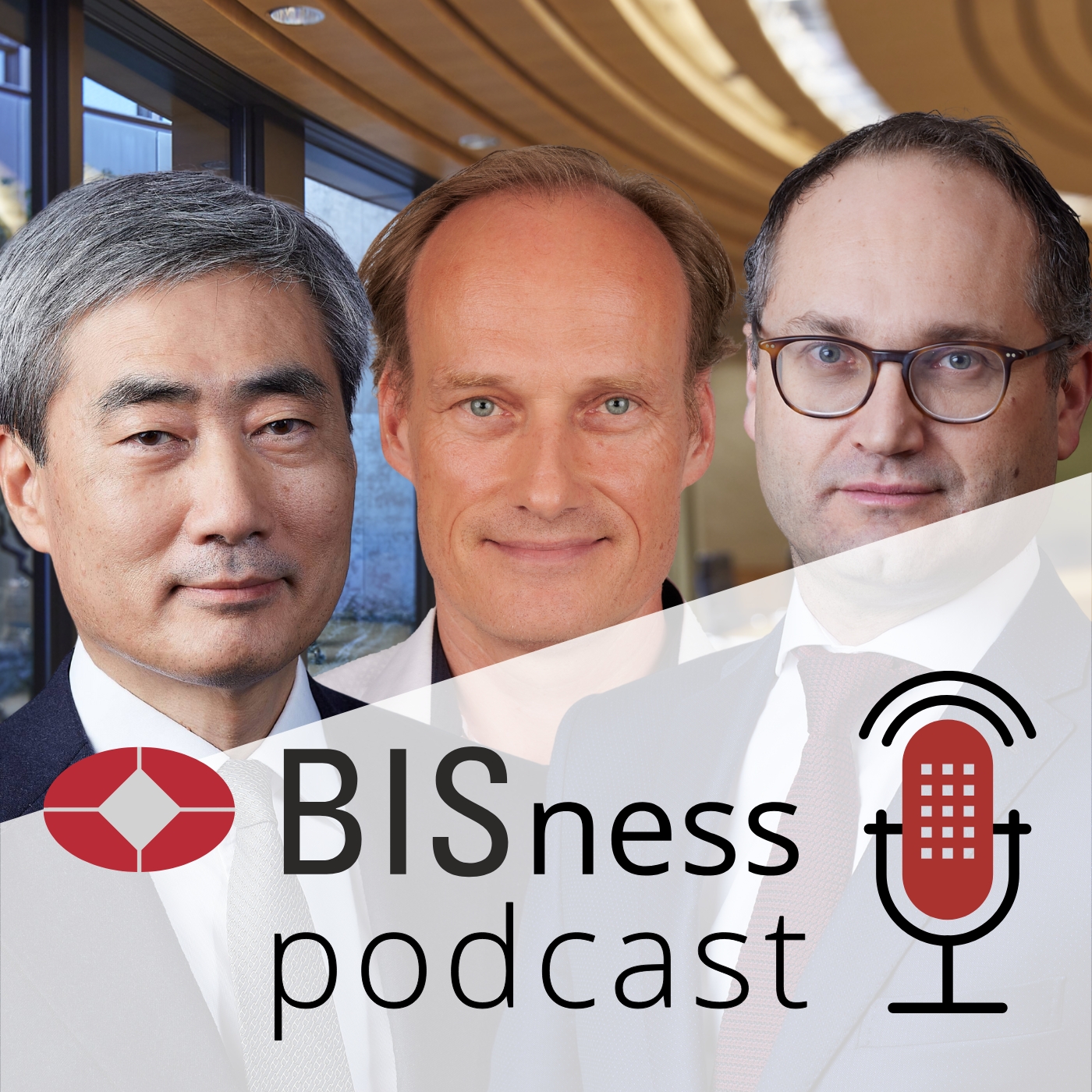
Shifting currents in FX and interest rate derivatives
Our latest BISness podcast analyses the 2025 Triennial Survey on FX and interest rate derivatives markets. Hyun Song Shin, Andreas Schrimpf and Goetz von Peter discuss market shifts and the implications for the global financial system.
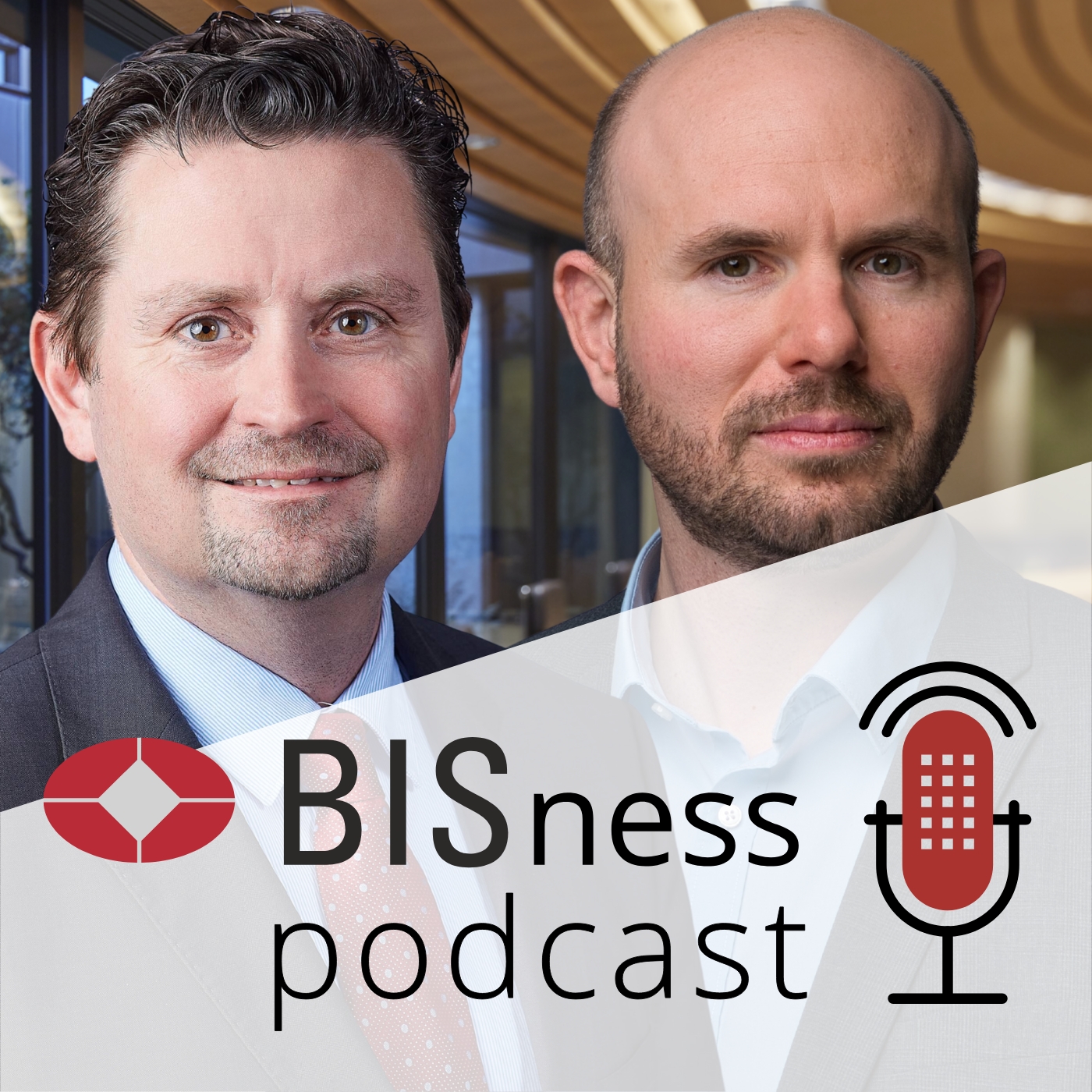
A primer on tokenisation
Morten Bech and Jon Frost explain the concept of tokenisation and how it can improve the international financial system.

The transformation of the life insurance industry: systemic risks and policy challenges
Gaston Gelos and Frank Parker explain how the life insurance industry has undergone a profound structural transformation since the Great Financial Crisis, amid a prolonged period of exceptionally low interest rates and evolving regulatory frameworks.
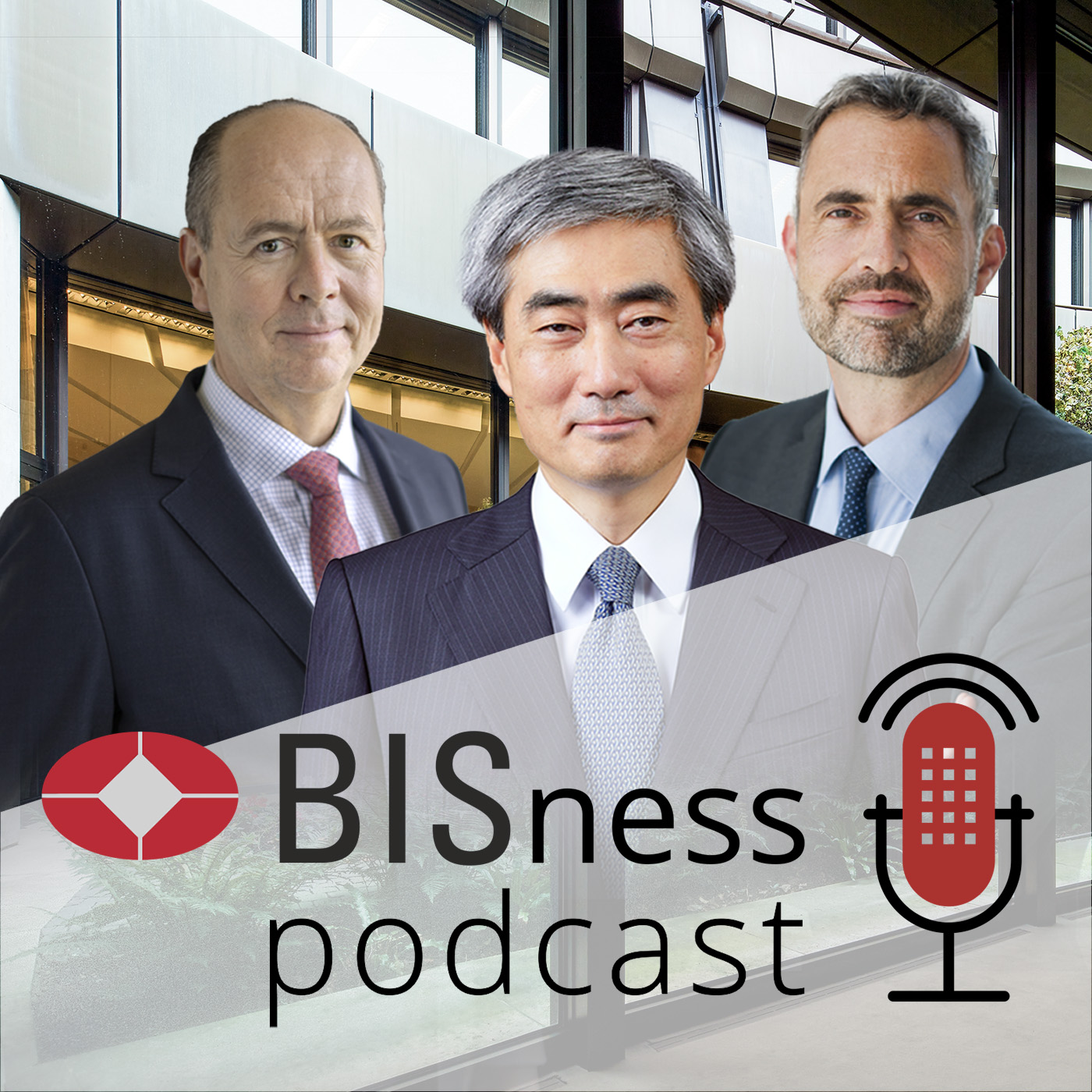
Media briefing on the BIS Quarterly Review, September 2025
Hyun Song Shin summarises the September 2025 BIS Quarterly Review and, along with Gaston Gelos and Frank Smets, answers journalists' questions about market developments, the state of the global economy and fiscal policy.
BIS Media Briefing - Annual Economic Report 2025
Agustín Carstens, Andréa M Maechler and Hyun Song Shin brief the media on the main messages of the Annual Economic Report. Read more: https://www.bis.org/publ/arpdf/ar2025e.htm

Stability amid uncertainty
Agustín Carstens and Hyun Song Shin say trade disruptions and policy uncertainty cloud the global economic outlook, making sound public finances and price stability critical for sustainable growth.
BIS Media Briefing - The next-generation monetary and financial system
Hyun Song Shin and Andréa M Maechler brief the media on the main messages of Chapter III of the Annual Economic Report. Read more: https://www.bis.org/publ/arpdf/ar2025e3.htm
The next-generation monetary and financial system
Hyun Song Shin explains how tokenised platforms with central bank reserves, commercial bank money and government bonds can underpin the next-generation monetary and financial system.
The history of the BIS
The BIS marked its 95th anniversary in May 2025. Andréa M Maechler and Tobias Straumann talk about its origins and how its role has developed over the years.

Tech firms in banking
Johannes Ehrentraud explains the evolving relationship between banks and tech firms in the financial sector.
Media briefing on the BIS Quarterly Review, March 2025
Hyun Song Shin summarises the March 2025 BIS Quarterly Review and, along with Gaston Gelos and Frank Smets, answers journalists' questions about market developments, the state of the global economy and fiscal policy.
Innovation Hub work programme 2025-26
Cecilia Skingsley reflects on the first five years of the BIS Innovation Hub and discusses how it can continue to be useful to the central banking community.
Media briefing on the BIS Quarterly Review, December 2024
Claudio Borio and Hyun Song Shin summarise the December 2024 Quarterly Review and answer journalists' questions about financial market developments and the economic outlook.
Price stability and trust in money
Andréa M Maechler explains why price stability matters for consumers, employers, and investors and how central banks provide trust in money on three fronts, among other topics.
Fast payments and central bank digital currencies: rivals or partners?
Jon Frost of the BIS Office for the Americas and Holti Banka from the World Bank dive into fast payments and central bank digital currencies, exploring their key differences and similarities, and looking into what the future holds.

Central banks' role in climate change-related topics
Bank of France Governor François Villeroy de Galhau, Bank of Japan Governor Kazuo Ueda, Bank of Spain Governor José Luis Escrivá and European Central Bank President Christine Lagarde discuss the implications of climate change for the real economy and central banks. Link to event page: https://www.bis.org/events/green_swan_2024/overview.htm
Housing costs
Deniz Igan explains the drivers and implications of the strong growth of housing costs despite a decline in inflation.
Media briefing on the BIS Quarterly Review, September 2024
Claudio Borio and Hyun Song Shin summarise the September 2024 Quarterly Review and answer journalists' questions about financial market developments and the economic outlook.

The carry trade unwind
Andreas Schrimpf and Vladyslav Sushko explain the drivers and implications of the unwinding of carry trades, which were associated with financial market turbulence in August 2024.

Laying the foundations
Agustín Carstens outlines the ideal policy constellation for the fastest growth with the lowest inflation and issues a call to action for governments.
Monetary policy in the 21st century: lessons learned and challenges ahead
Claudio Borio discusses the lessons learned for monetary policy from the extraordinary events of the past 25 years, and looks ahead to upcoming challenges. Read more.
AI and the economy: implications for central banks
Hyun Song Shin discusses the benefits and challenges for central banks of the latest artificial intelligence technology. Read more.
Regulating non-bank financial intermediaries
Should a prudential regulatory regime apply to non-bank financial intermediaries – and if so, what should it look like? Financial Stability Institute Senior Advisors Johannes Ehrentraud and Raihan Zamil discuss this, drawing from their recent FSI Insight paper: Safeguarding the financial system's spare tyre: regulating non-bank retail lenders in the digital era (bis.org).
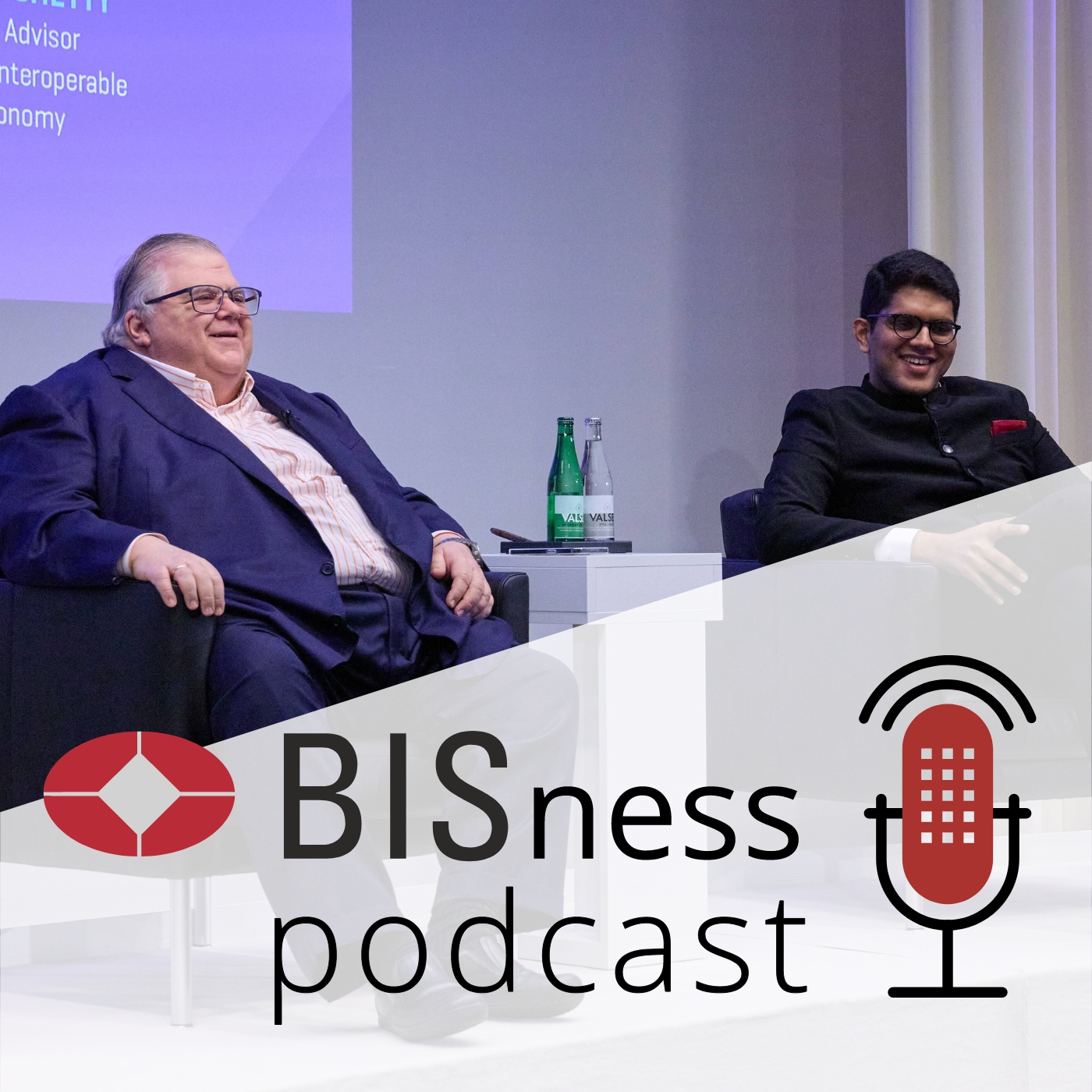
Finternet: the financial system for the future
BIS General Manager Agustín Carstens and Siddharth Shetty, from the Foundation for Interoperable Digital Economy, discuss a vision of multiple interconnected financial ecosystems designed to empower individuals and firms, the Finternet, at the BIS Innovation Summit 2024.

In conversation with Yuval Noah Harari: AI and the evolution of financial systems
Historian, philosopher and best-selling author Yuval Noah Harari discusses with Cecilia Skingsley, head of the BIS Innovation Hub, the potential impacts of future technologies on human society and the global financial system.

Gen AI, the economy and consumer expectations
How will the widespread adoption of artificial intelligence (AI) affect inflation and the global economy? How do consumers perceive the impact of AI on their everyday lives? BIS economists Iñaki Aldasoro and Sebastian Doerr discuss these issues, drawing from their recent Working Paper The impact of artificial intelligence on output and inflation and BIS Bulletin Survey evidence on gen AI and hous

The Basel Committee at 50
The Basel Committee at 50; listen to Chair Pablo Hernández de Cos and Secretary General Neil Esho discuss the Committee's work – past, present and future, as well as the International Conference of Banking Supervisors.
Media briefing on the launch of Project Agorá
Cecilia Skingsley and Hyun Song Shin explain the BIS's new project to test the tokenization of commercial and central bank money, in association with seven central banks.

Innovation, inflation and inclusion
Roberto Campos Neto, Governor of the Central Bank of Brazil, talks to Alexandre Tombini, Chief Representative for the BIS Office for the Americas, about past challenges for the central bank and future priorities, including instant payments and financial inclusion.

Women, central banking, and Chile's macroeconomic landscape
Should central banks worry about women's level of participation in the economy and the economic profession? Rosanna Costa, President of the Central Bank of Chile talks to Alexandre Tombini, Chief Representative for the BIS Office for the Americas about why they should, while also sharing some highlights on Chile's current macroeconomic situation.
Media briefing on the BIS Quarterly Review, March 2024
Claudio Borio and Hyun Song Shin summarise the March 2024 Quarterly Review and answer journalists' questions about financial market developments and the economic outlook.

Artificial intelligence in central banking
Central banks were early adopters of AI and machine learning. But as the world ramps up efforts to embrace new technologies, what does this mean for central banks? How can they stay ahead of the curve? Sebastian Doerr and Douglas Araujo discuss the findings of a BIS Bulletin on AI applications in central banking and the challenges that central banks might face in the future in this area.

Monetary policy and disinflation
What role have central banks played in bringing down inflation? 2023 has seen central banks across the globe respond forcefully to the recent rise in inflation. But given that much of this increase was due to sectoral shocks, what can monetary policy do to counter it? Benoit Mojon explains the findings of a new BIS Bulletin on monetary policy and disinflation, co-authored with other BIS economists

What might artificial intelligence mean for inequality?
Artificial intelligence is on everyone's minds these days. Many are predicting a period of upheaval ahead, while others believe it will be beneficial to economic growth and productivity. But how will all this impact the richest and poorest in society? Jon Frost, Head of Economics for the Americas, and Giulio Cornelli, Senior Financial Market Analyst, shed some light on this question, drawing from
Media briefing on the BIS Quarterly Review, December 2023
Claudio Borio and Hyun Song Shin summarise the December 2023 Quarterly Review and answer journalists' questions about financial market developments and the economic outlook.
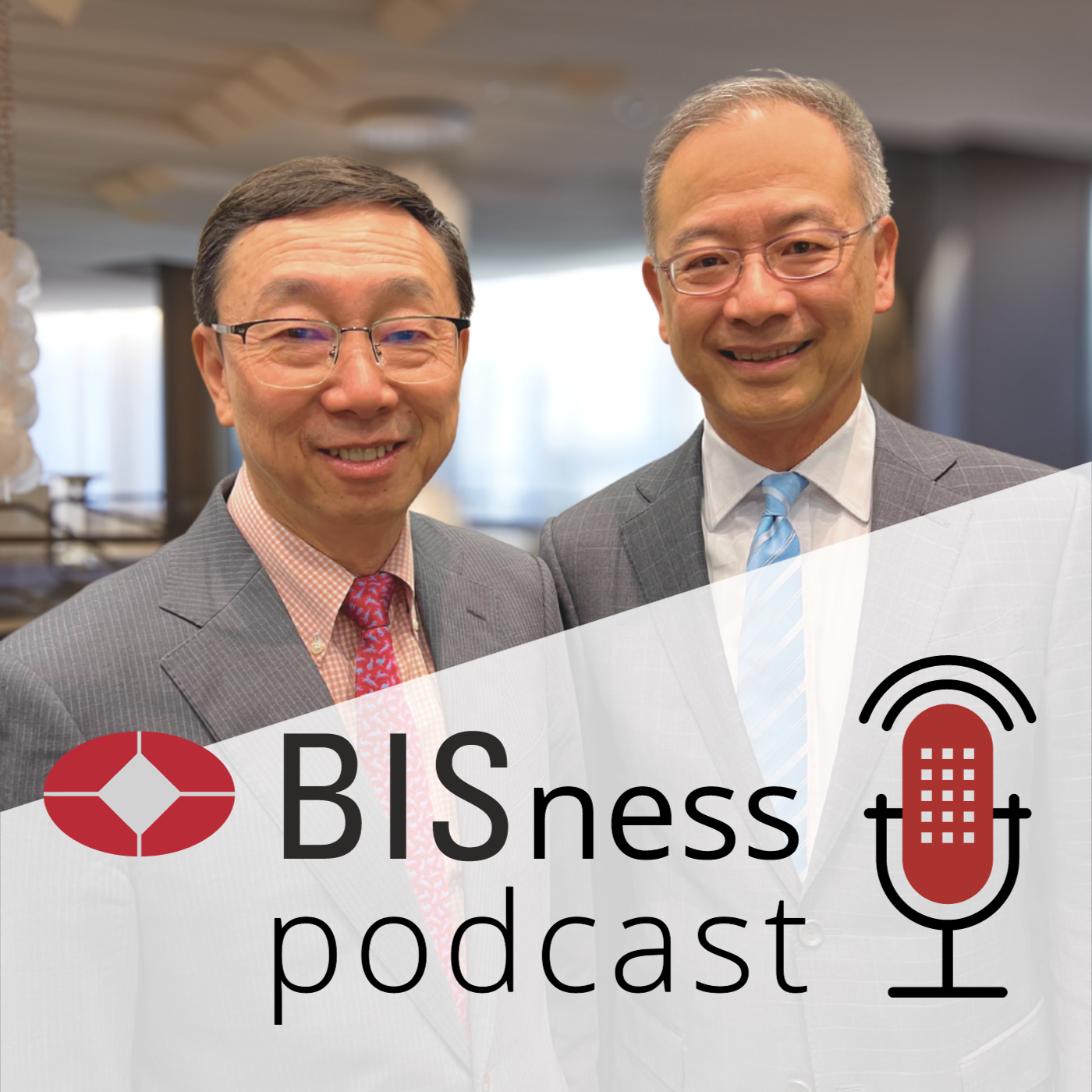
30 years of the HKMA with Eddie Yue and Tao Zhang
Which trends might shape Asia's economic outlook? Which challenges do emerging markets currently face? Hong Kong Monetary Authority (HKMA) Chief Executive Eddie Yue discusses these questions with Chief Representative of Office for Asia and the Pacific, Tao Zhang. The HKMA has been a member of the BIS for over 25 years. Chief Executive Yue also spoke about the evolution of this relationship and a

Will the real stablecoin please stand up?
Do stablecoins live up to their name and can they serve as a reliable means of payment and store of value? Senior Economist Anneke Kosse discusses these questions based on the BIS paper "Will the real stablecoin please stand up?" She also highlights how significant data gaps regarding the users and uses of stablecoins make it difficult to ascertain the risks they pose to the smooth functioning of
Media briefing on the BIS Quarterly Review, September 2023
Claudio Borio and Hyun Song Shin summarise the September 2023 Quarterly Review and answer journalists' questions about financial market developments and the economic outlook.

Navigating the disinflation journey
The last mile to price stability will be most challenging, says Agustín Carstens, discussing the risks to the global economy laid out in the BIS Annual Economic Report.
Monetary and fiscal policy interactions
Claudio Borio offers a historic perspective on the interaction of fiscal and monetary policy to better understand the challenges facing the global economy today, and draw some lessons for the future. Read more.

Improving the old, enabling the new
Hyun Song Shin explains the main elements of the unified ledger and how tokenisation can be a game changer for the monetary system. Read more.

Inequality hysteresis: what it is and why it matters
Over the past 40 years, income inequality within countries has risen inexorably. A book by BIS authors explains why this has profound implications for the design of macroeconomic stabilisation policies.

Innovation and the future of the monetary system
In a speech, Agustín Carstens argues that central banks need to think big to reap the greatest benefits from innovation. He discusses the options with Sopnendu Mohanty, Chief Fintech Officer of the Monetary Authority of Singapore. Read the speech here: https://www.bis.org/speeches/sp230222.htm

Crypto shocks and retail losses
How did the 2022 turmoil in the crypto market affect small, retail investors compared with large or insider investors? Was there any spillover to traditional financial markets? Jon Frost, Head of Economics for the Americas, and Giulio Cornelli, Senior Financial Market Analyst, provide some answers based on their recent BIS Bulletin Crypto shocks and retail losses, co-authored with Sebastian Doerr

Project Nexus – charting a course for frictionless cross-border payments
Andrew McCormack, Head, BIS Innovation Hub Singapore Centre, discusses Project Nexus, a blueprint for connecting multiple national payment systems into a cross-border network that could enable international payments to happen almost instantaneously. He talks about the successful completion of Phase II, which involved building a working prototype to link three established payment systems, and looks

A candid view on green finance
Global green financing has grown 100 times over the past decade. And yet, it is still surrounded by considerable controversy – why is it so? Bank of France's Jean Boissinot – a leading expert of green finance in the central bank community – explains what green finance can (and cannot) do for environmental sustainability. He also highlights the role and achievements of the Network for Greening the

Cecilia Skingsley: Getting innovation right is not trivial
Cecilia Skingsley looks at her first six months as Head of the BIS Innovation Hub, the path of innovation on the public sector and the role of central banks and the private sector in providing financial services in a rapidly changing world. She says that central banks have to follow and understand not only cyclical changes, but also structural changes, which "can be slow and take a long time, such
Media briefing on the BIS Quarterly Review, March 2023
Claudio Borio and Hyun Song Shin summarize the March 2023 Quarterly Review and answer journalists' questions about market developments and the economic outlook.

"Front-loading" monetary tightening: pros and cons
Central banks face difficult trade-offs when deciding the speed and size of interest rate hikes to counter inflation, as well as how long to keep the policy rate at the peak. Egon Zakrajšek, Senior Adviser in the BIS Monetary and Economic Department, discusses the benefits and risks of "front-loading" rate increases, drawing from a recent BIS Bulletin he co-authored with Paolo Cavallino, Giulio Co

Using CBDCs across borders: lessons from practical experiments
The BIS Innovation Hub is leading practical experiments to show how CBDCs can help deliver faster, cheaper and more transparent cross-border payments. Codruta Boar, advisor at the Innovation Hub, discusses research that she has co-authored with Morten Bech, Daniel Eidan, Philipp Haene, Henry Holden and Wee Kee Toh. Read more: https://www.bis.org/publ/othp51.htm

The global foreign exchange market in a volatile time
Turnover in global foreign exchange (FX) markets reached $7.5 trillion per day in April 2022 in a volatile market, the 2022 Triennial Survey shows. Vlad Sushko, senior economist at the BIS, discusses a shift towards less "visible" FX trading venues. Read more.

Persistent risks in foreign exchange trades, hidden dollar debt
Claudio Borio and Hyun Song Shin brief the media on the key takeaways of the BIS December 2022 Quarterly Review and answer questions about FX markets, liquidity conditions, monetary policy and crypto assets.

Project Genesis and the return to a less polluted world
Innovative technologies can foster a greener future by transforming finance. A case in point is the work being done by the BIS Innovation Hub Centre in Hong Kong. Bénédicte Nolens, head of the center, explains how Project Genesis 1.0 and 2.0 aim at making it more attractive to issue and invest in green bonds.

Under pressure: market conditions and stress
How can policymakers detect future stress risk in financial markets? Our staff developed new market conditions indicators for three key market segments.
Markets swing on changing perceptions of the policy outlook: BIS Quarterly Review
Claudio Borio and Hyun Song Shin summarize the September 2022 Quarterly Review and answer journalists' questions about market developments and the economic outlook.
More of the BIS to Asia, more of Asia to the BIS
Asia-Pacific has often been at the centre of global developments in recent years. Siddharth Tiwari, departing Chief of the BIS Office for Asia and the Pacific in Hong Kong, explains how the region and BIS involvement there have evolved

Financial Inclusion and CBDC
Nana Yaa Boakye-Adjei, Senior Consultant at the World Bank, speaks about Financial Inclusion, CBDC and the work she has been doing during her secondment with the FSI at the BIS.

Old challenges, new shocks
High inflation and mounting growth headwinds raise the prospects of global stagflation and call for quick and decisive action by central banks, says Agustín Carstens, presenting the BIS's Annual Economic Report.
Inflation: a look under the hood
The recent surge in inflation has underscored the need to "look under the hood" to better understand how relative price changes can morph into broader-based inflation. Claudio Borio summarises the key insights from this fresh perspective.

The future monetary system
What will the future of the monetary system look like? Hyun Song Shin, BIS Economic Advisor and Head of Research, presents a blueprint for the future monetary system as the fusion of enhanced technical capabilities around the core of the trust embodied in central bank money, as outlined in a special chapter of the BIS 2022 Annual Economic Report.

Is green the new black?
From black swans to green swans, Luiz Pereira da Silva talks about climate risks and what sustainable finance can realistically do for the transition to net zero, also in the light of the recent increase in energy prices.

Drivers of post-pandemic growth
What will global growth look like once the disruptions of the Covid-19 pandemic come to an end? Phurichai Rungcharoenkitkul explains why growth is likely to be slower in future without policy intervention.
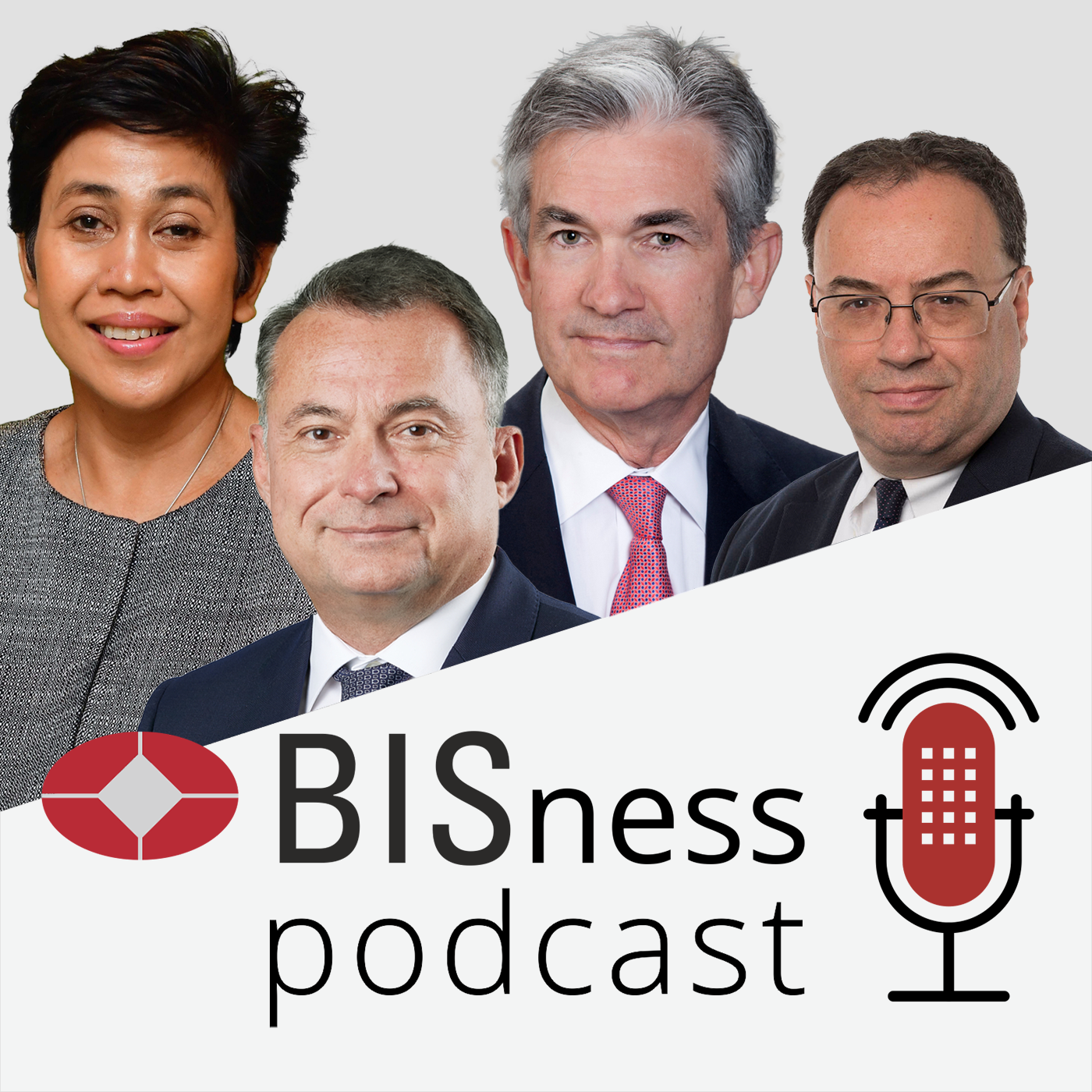
What are the challenges for central banks in a digital world?
Agustín Carstens speaks with Andrew Bailey from the Bank of England, Jerome Powell from the Federal Reserve Board, Joachim Nagel from the Deutsche Bundesbank and Noor Shamsiah Mohd Yunus from Bank Negara Malaysia about innovation and central bank digital currencies. Taken from a panel at the BIS Innovation Summit.

Cyber threats and cyber resilience
What is cyber resilience and how can institutions and users develop it? Chui Yong and David Whyte offer some insights into this fascinating topic.

Beyond green swans: the BIS's work on climate
Corrinne Ho offers a bird's eye view on all of the BIS's workstreams relating to climate change and green finance. From banking services to economic research, from innovation to regulation and capacity building, these activities all share the overarching principle of fostering international cooperation for the public good.

Die Ausstellung BIS 90 Years
Projektleiter und BIZ Historiker Piet Clement spricht über die BIS 90 Years Ausstellung, die vom 26. Oktober – 4. November 2021 in Basel stattfindet.

The BIS 90 Years exhibition
Project Manager and BIS historian Piet Clement and exhibition designer Pablo Berger discuss the BIS 90 Years exhibition set to take place from 26 October – 4 November 2021 in Basel.
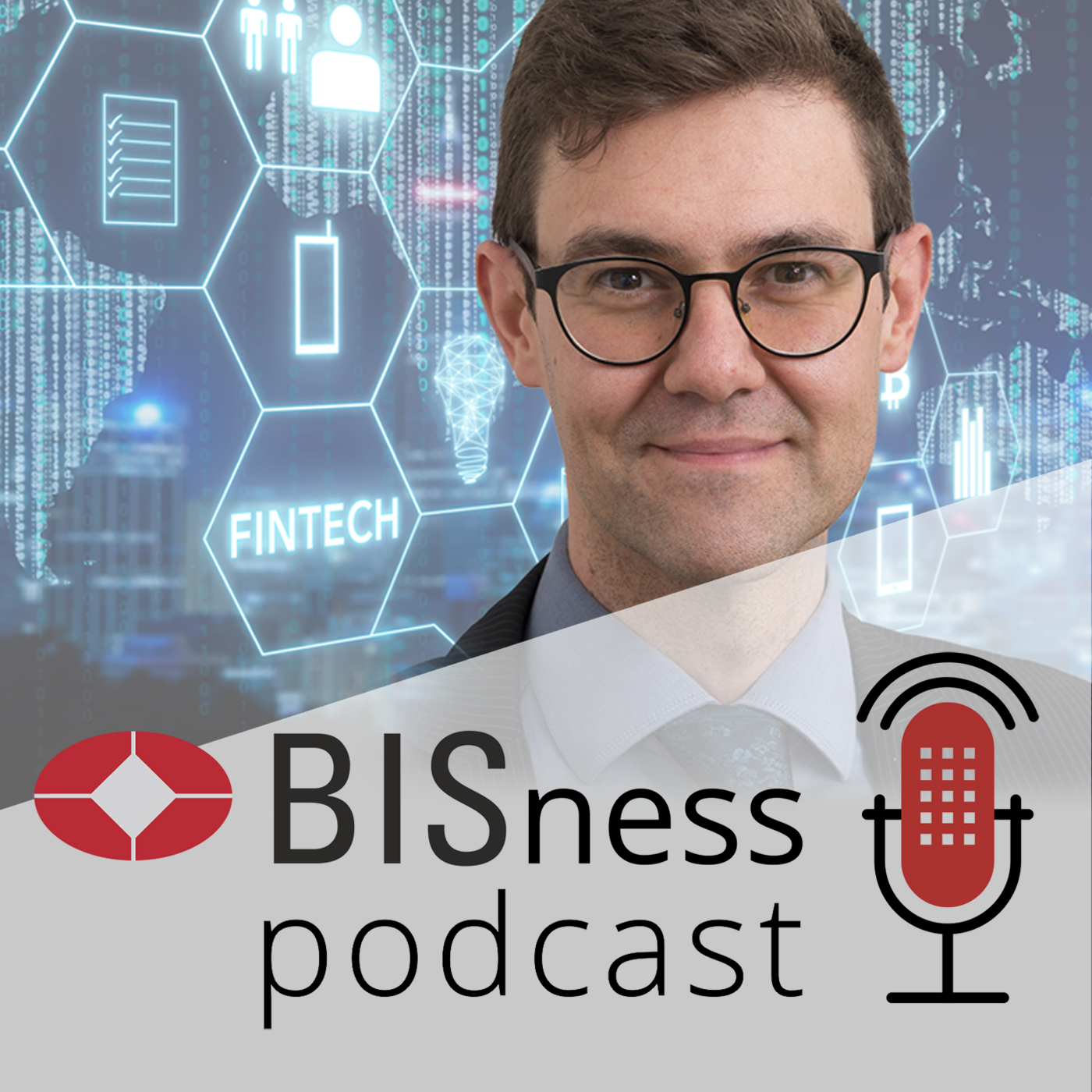
Big techs in finance: regulatory approaches and policy options
Johannes Ehrentraud reflects on potential regulatory approaches and policy options for big techs in finance, as described in FSI Brief 12, (co-author), FSI Occasional Paper 17, and other work at the BIS such as BIS Bulletin 45.
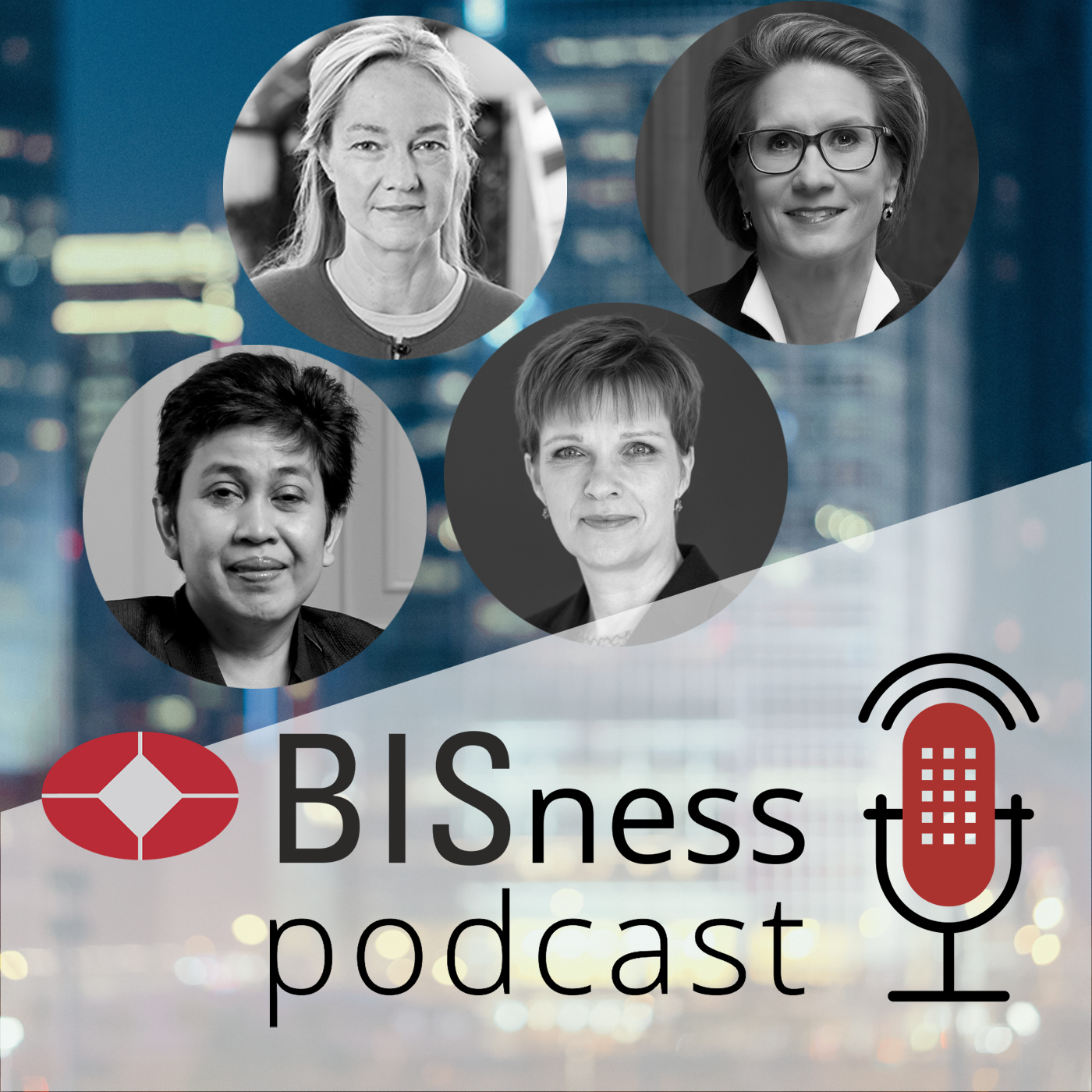
Women in central banking
Diversity is about inclusion". This podcast episode is a compilation of excerpts from a livestreamed panel discussion on women in central banking, moderated by Cecilia Skingsley and including panellists Andréa Maechler, Nor Shamsiah Mohd Yunus and Claudia Buch. See more

The distributional footprint of monetary policy
Claudio Borio discusses the nexus between inequality and monetary policy, as outlined in Chapter II of the BIS Annual Economic Report.

Covid and beyond
Agustín Carstens discusses the uneven economic recovery from Covid-19, the challenges for normalising fiscal and monetary policy and the outlook for inflation, as outlined in the 2021 Annual Economic Report.

CBDCs - an opportunity for the monetary system
Benoit Coeuré and Hyun Song Shin discuss Chapter 3 of the Annual Economic Report on CBDCs and how the BIS sees them best evolving for central banks, the public and financial stability.

The origins of the BIS's views on exchange rates, capital flows and the financial cycle
Barry Eichengreen discusses the origins of the BIS's views on exchange rates, capital flows and the financial cycle, based on his chapter in a recently published book issued to mark the Bank's 90th anniversary.