
World of Work podcasts by the ILO
The International Labour Organization (ILO) is a United Nations agency dedicated to promoting social justice and internationally recognized human and labour rights. This podcast explores topics related to decent work, employment opportunities, social protection, and dialogue on work-related issues. It features discussions and insights aimed at advancing the creation of decent work for all women and men.
Folgen
Big data: What it is, what it does and how it impacts the world of work
The latest episode of the “Global Challenges - Global Solutions” podcast explores the transformative role of Big Data in shaping policies and informing decision-making in today’s interconnected world. Big Data is different from traditional data, covering a wider range of information, and can include insights gathered from mobile phone data This new tool for powering economic development and infor
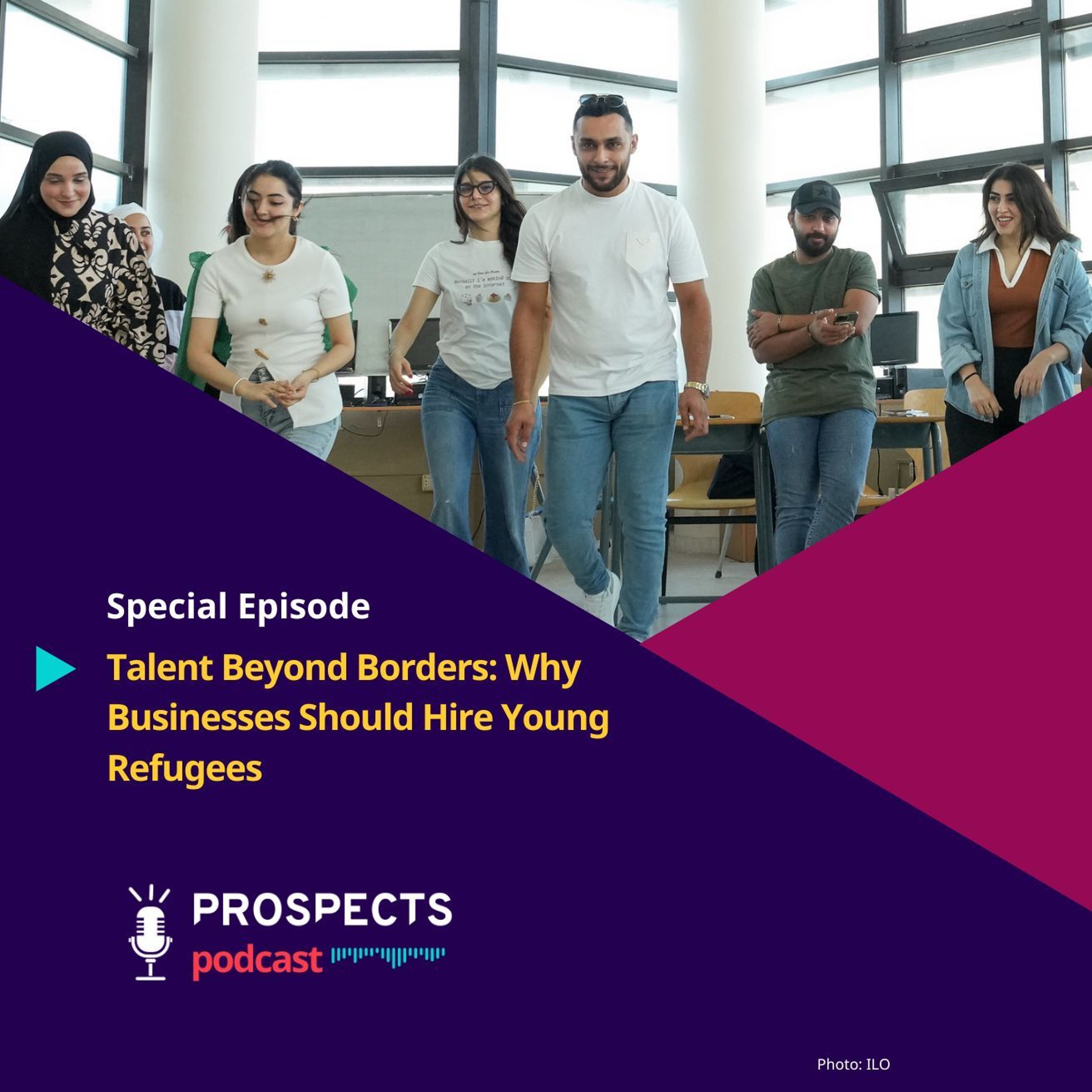
Talent Beyond Borders: Why Businesses Should Hire Young Refugees
This PROSPECTS podcast episode explores how the private sector can drive economic inclusion of young refugees by expanding access to decent work and protecting their rights at work. Roman Bojko, Human Rights and Social Impact Leader at Ingka Group shares more about the company’s global Skills for Employment initiative and lessons learned from integrating refugee talent across 26 countries. The con
Trade: Good or bad for jobs?
Is trade good or bad for jobs? For years, ILO research has shown how international trade can be an engine of growth and creating decent jobs. But things are changing. The realities of trade and investment today are far more complicated than they used to be, and globalization has had an uneven impact. So, does it still mean that trade remains a viable strategy for promoting growth and reducing pov
Skills financing: An eroding pillar of social development?
Investments in skills are instrumental in achieving social and economic goals. From the perspective of the 2030 Sustainable Development Goals, skills are important to achieving SDG 8 on decent work and economic growth, SDG 4 which includes TVET, and others.
Be that as it may, levels of financing of skills and lifelong learning remain inadequate and not in tune with national development needs. Th
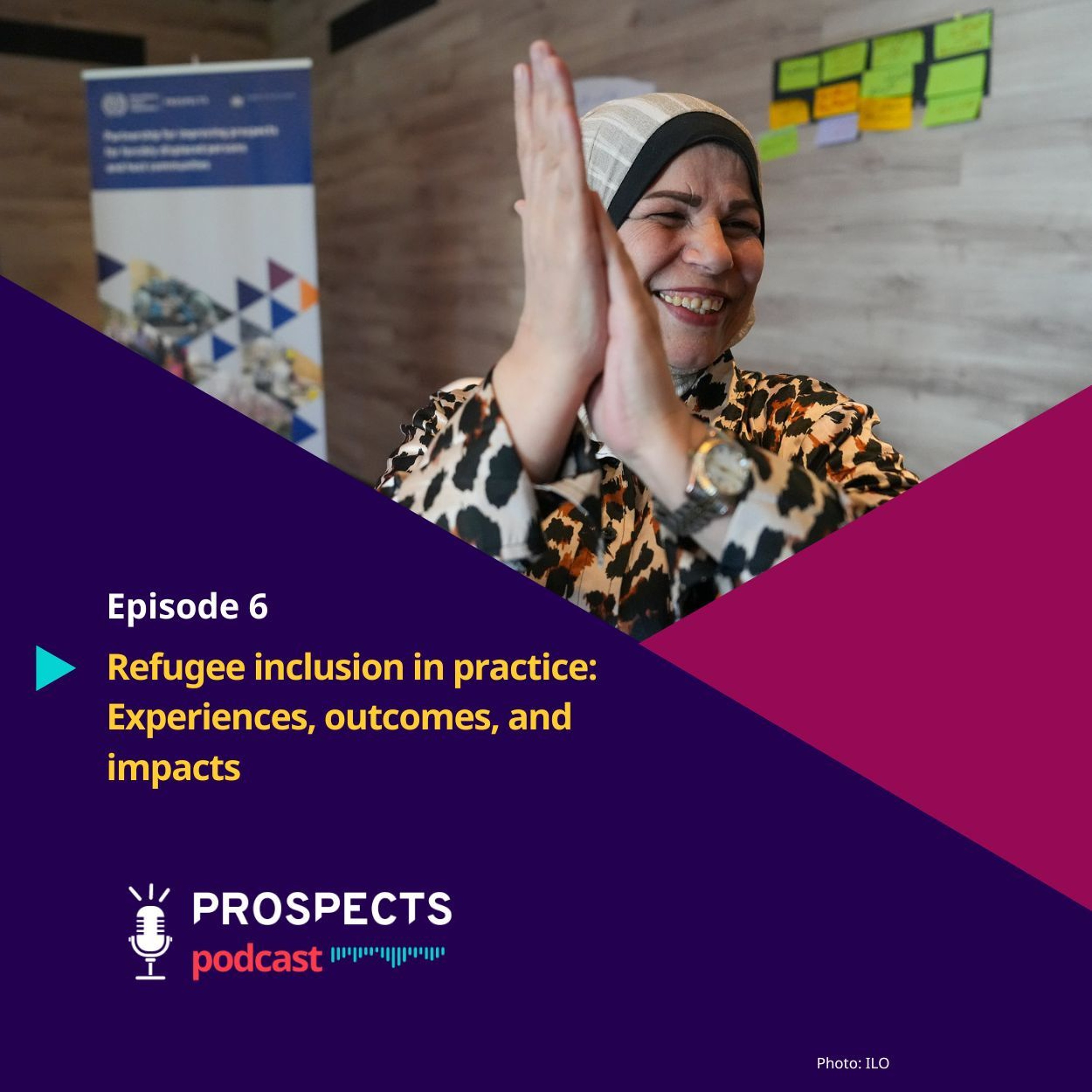
Refugee inclusion in practice: Experiences, outcomes, and impacts
In this sixth episode of Refugees at work – What are their prospects?, we explore how the Humanitarian-Development-Peace Nexus (HDPN) is reshaping the international refugee response. Speakers, Svein Erik Stav and Tewodros Aragie Kebede share research findings and field experience from Uganda, Ethiopia, Jordan and Colombia, where new policies have expanded refugee access to work and fostered econom
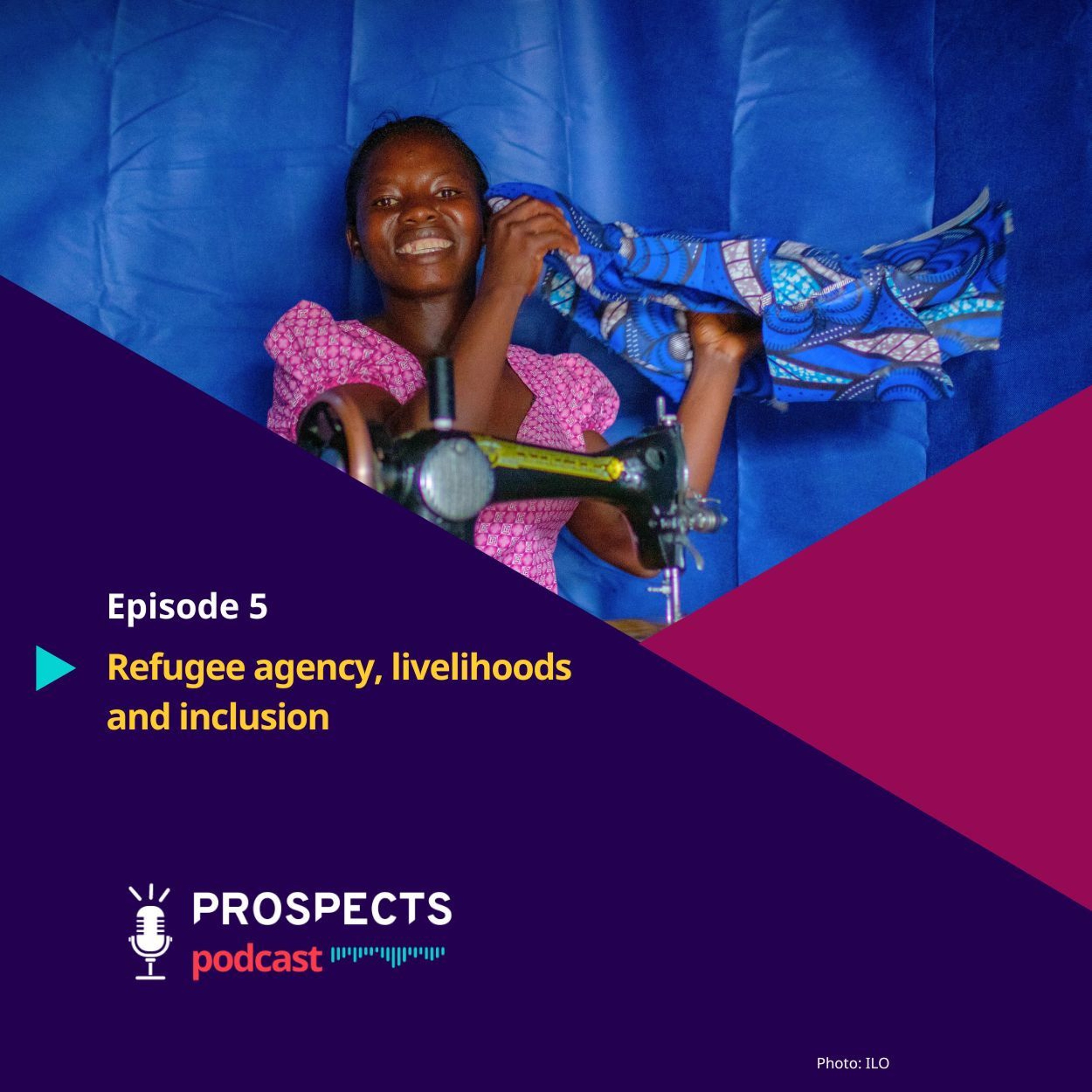
Refugee agency, livelihoods and inclusion
The majority of the world’s refugees live in countries with fragile economies, where opportunities for employment and self-reliance are often limited. With displacement lasting more than a decade on average, the question of how refugees can build sustainable livelihoods has become increasingly urgent.
In this fifth episode of Refugees at work – What are their Prospects?, Professor Alexander Betts
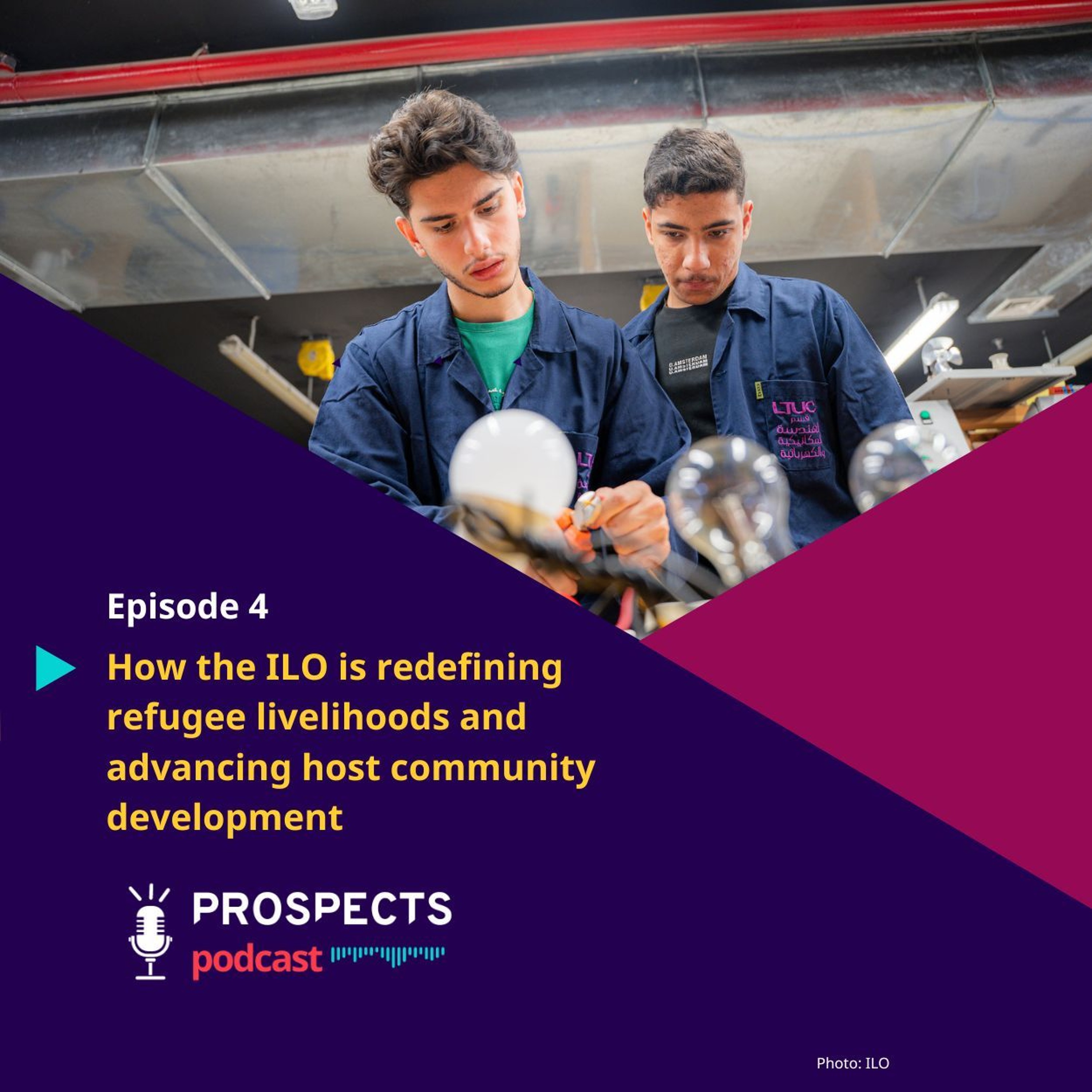
How the ILO is redefining refugee livelihoods and advancing host community development
This episode traces the ILO’s long history of engagement in displacement contexts, from its early work in the aftermath of the World Wars to its leadership today in promoting decent work for refugees and host community members. Nick Grisewood explains how the Syrian crisis, the New York Declaration, and the Global Compact on Refugees shaped the ILO’s renewed involvement and laid the foundation for
Innovating refugee response: How the Netherlands built the PROSPECTS Partnership
The third episode of the Refugees at Work series turns to the critical role of donors in advancing inclusive and sustainable responses to forced displacement. Ana Uzelac reflects on how the Netherlands has pioneered new approaches through the PROSPECTS partnership, shifting from short-term humanitarian aid to multi-annual development financing that prioritizes refugee self-reliance and host commun
Young, Displaced & Determined: Refugee Voices on Rights to and at Work
This PROSPECTS podcast episode explores young refugees’ rights to and at work. Despite international commitments recognizing their right to decent work, refugee youth continue to face legal, political, and practical barriers to full economic inclusion. Hasan Almatroud, a young Syrian refugee leader and Programme Coordinator for Amala Education in Jordan, and Shadya Abduljabbar, a Yemeni refugee in
The history of the ILO’s refugee engagement
The number of refugees worldwide has doubled in the past decade to 32 million, making forced displacement one of the defining challenges of our time. Yet the struggle to balance humanitarian response, labour market realities, and long-term development is not new.
In this second episode of Refugees at Work – What Are Their Prospects?, we speak with Katy Long about the ILO’s 100-year history naviga
Transforming the international refugee regime & framing the Humanitarian Development & Peace Nexus
The first episode in the series provides a comprehensive overview of the evolving dynamics of forced displacement and their implications for labour markets and development policy in host countries. Professor Zetter outlines key trends, including the increasingly protracted nature of refugee situations, the shift from camps to urban settlements, and the increasing importance of labour market acces
CBC Radio One Interview: Mapping AI’s Impact on Jobs- Behind the ILO’s New Global Exposure Index
ILO Senior Researcher Pawel Gmyrek joins Manjula Selvarajah, technology columnist and host at CBC Radio One (Canada), to unpack the findings of a new ILO Working Paper on generative AI and jobs. The conversation explores how GenAI is transforming the world of work, the methodology behind the ILO’s refined global exposure index, and what policymakers, workers, and employers should keep in mind as t
AI and HR: What Happens When Algorithms Manage People?
What happens when algorithms — not people — decide who gets hired, promoted, or assigned the night shift?
In this debut episode of Work in Progress, Alessandro from the ILO Research Department speaks with Nikolai Rogovsky, Senior Economist at the ILO, about how artificial intelligence is transforming human resource management — and what it means for fairness, dignity, and the future of work.
Wit
Young and unhappy in the world of work: What can we do about it?
Things should be looking good for young people in the world of work, but they’re not. While unemployment among young workers between 15 and 24 has recovered from the impact of the Covid-19 pandemic, there’s a growing epidemic of unhappiness among those workers in both the developed and now the developing world. So, what is to be done? This podcast asks David Blanchflower, a professor at Dartmouth
Can we bridge jobs and economic policies while ensuring rights are protected?
In the past half decade, the world of work has faced unprecedented challenges in the form of a global pandemic, social, political and economic crises, the explosive growth of Artificial Intelligence, and an increase in destructive climate events, among others.
Meeting these challenges will require policies that support SDG 8 on decent jobs and economic growth and help advance the broader objecti

Contrato Justo: Formalizar es Reconocer - spot 2
Campaña para promover la formalización y el reconocimiento social de las trabajadoras del hogar en el Perú
Contrato Justo: Formalizar es Reconocer - spot 1
Campaña para promover la formalización y el reconocimiento social de las trabajadoras del hogar en el Perú
Contrato Justo: Formalizar es Reconocer - spot 3
Campaña para promover la formalización y el reconocimiento social de las trabajadoras del hogar en el Perú
Nature-based Solutions: How protecting the planet can create jobs
Can Nature-based Solutions help us address environmental challenges, while laying the groundwork for creating millions of new jobs? A report by the ILO, the UN Environment Programme and the International Union for Conservation of Nature titled “Decent Work in Nature-based Solutions (NbS) says NbS has the potential to add up to 32 million jobs by 2030 to the already more than 60 million working to
Employment Impact Assessment: What we know and why it matters
Good employment policies underpin efforts to create more and better jobs, and help reduce inequalities and poverty, and empower people, especially women, young people and the most vulnerable such as people with disabilities. What is more, these polices also help address decent work deficits and are critically important to the realization of the 2030 Sustainable Development Goals, specifically SDG
Skills for migration and employment: Do we need a new paradigm?
Amid rising labour shortages and employers around the world struggling to find skilled workers, labour migration, if managed properly, can help widen the pool of available skills. But the complex issue of increasing migration and the skills challenges faced by migrant workers and employers is huge. So how can we help migrant workers acquire the skills they need to find decent jobs, and employers f
The trillion-dollar question: does rising productivity lift all boats?
Productivity growth is seen as central to economic development and social progress and drives up wages, living standards for workers and the competitiveness of businesses. So, how are different regions and countries increasing productivity, and can it be done in an inclusive way? In this podcast Professor Gaaitzen De Vries in the Department of Global Economics and Management of the University of G
Challenges and opportunities of an ageing workforce: A worker’s perspective
The number of ageing workers in the workforce is growing. People are working longer, either because they want to, they need to to make ends meet or have because they have unique skills. So, what are the implications of this trend for the trade union movement? What does it mean for older workers and their representatives? And how can trade unions address the multiple challenges that are emerging as
The Silver Tsunami: Are older workers the wave of the future?
There’s a new trend in the world of work…the growth of an ageing workforce.
It’s called the “Silver Tsunami’, and it means more people are working past retirement age, either because they want to or because they must, to make ends meet.
So, what are the implications of this trend? What does it mean for retirement plans and social security? And what does it mean for employers and enterprises fa
Micro-credentials: Powerful new learning tool, or just “pouring old wine into new bottles”?
An explosion of online and micro-credential programmes since COVID-19 highlights the importance of lifelong learning to upskilling, reskilling and economic recovery. While these learning courses may help successfully train and equip large numbers of workers with the skills needed for the jobs of the future, they also raise several questions. In this podcast we explore the future of micro-credentia
Addressing major labour market challenges in the world of work: Implications for promoting jobs
The world of work is being buffeted by a torrent of change, with multiple crises raising the magnitude and complexity of employment challenges to unprecedented levels.
Labour markets have been hit by disruptive mega-trends that weren’t on our radar just a decade ago.
These range from challenges we already know like gender disparities, informality and youth unemployment, to new and emerging issu
Tackling gender segregation: How a new policy tool can finally help bring about change
In the world of work, men and women are often segregated by their type of work, one of the main reasons women suffered more job losses during the COVID-19 crisis than men and are facing a slower recovery. Now, a joint programme of UN Women and the ILO has developed a new tool to help policymakers rethink the design of sectoral policies and make informed decisions on where to invest to have a great
SPECIAL EPISODE: Malaysia's rubber industry takes on forced labour.
During the COVID-19 pandemic, global demand for rubber gloves soared, prompting the Malaysian rubber industry to increase production in the face of labour shortages. Forced labour reports led, among other things, to the United States seizing and holding the goods of seven Malaysian companies. In response, the sector adopted a zero recruitment fee model and reimbursed migrant workers, making signif
Informal apprenticeships and the future of work
In a world with high rates of unemployment and underemployment, more and more people are looking for work amidst rapid change that is increasing skills mismatches and shortages.
Millions of young people in the developing world acquire skills through apprenticeships in the informal economy. In many countries they greatly outnumber youth acquiring skills through formal technical and vocational edu
SPECIAL EPISODE: Fighting forced labour in fishing - How Namibia became a pioneer
In just three years Namibia has become a world leader when it comes to tackling forced labour in fishing. What’s more, Namibia now coordinates labour and environmental inspections of vessels. Namibia’s experience shows that environmental degradation and forced labour in fishing are no longer hidden and can be addressed cost-effectively at the same time.
In this special episode we interview three
How can we close the skills gap? Quality apprenticeships and the future of work
The world of work is undergoing profound change. These changes are creating skills gaps, mismatches and shortages that are resulting in unfilled jobs and lost productivity.
So how do we close this skills gap? In search of an answer, the ILO has adopted a sweeping new international labour standard focused on updating its approach to skills and quality apprenticeships.
The new “Recommendation on
Artificial Intelligence and the future of work: A threat or a promise?
Are we smart enough to manage the impact of Artificial Intelligence on the world of work?
It seems there are rising concerns over whether AI is a "threat or a promise”. Is this concern warranted?
To answer the question, we interviewed Uma Rani, a Senior Economist at the ILO’s Research Department, and Enrique Fernandez Macias, a researcher at the European Commission’s Joint Research Centre. They
Jobs for Africa and beyond: The role of structural transformation in the 21st century
The world is facing a host of challenges causing sluggish employment growth in some societies. The COVID pandemic hasn’t helped, weakening, and even in some cases reversing hard won gains in employment, with devastating economic impact. One key problem is what a recent ILO report sees as a lack of what it calls “structural transformation”.
In this podcast, Bernd Mueller, Manager of the Employmen
The quest for social justice: The role of research and dialogue
Advancing social justice is an idea that’s getting new attention these days. One of the main areas where the need for social justice is growing as something people want is the world of work. Achieving that will be a tall order, given that more and more people are looking for jobs and more and more jobs looking for people to fill them. In this challenging environment, what role can research and dia
Women in apparel and footwear manufacturing: how does tech upgrading and automation affect them?
The workforce in the clothing and footwear manufacturing sector is often predominantly made up of female workers. Though these jobs require a high degree of skills, they are often underpaid, insecure and characterized by an uncertain future, in particular because of the risk of being replaced by automated equipment. So, how are women in the apparel and footwear manufacturing sectors affected by au
Innovative employment policies in a changing world of work: A new paradigm?
In a world facing growing uncertainty, multiple transformative changes are buffeting the world of work. Will these changes mean people and countries are being left behind, or provide opportunities for a new approach to employment policies that can improve people’s livelihoods, and make economies grow sustainably and produce decent and productive jobs?
In this podcast we ask two experts from the I
The technology paradox: Is it a great equalizer for some, but digital divider for others?
Technology has made enormous strides over the past few decades, improving many people’s lives, and creating incredible economic, scientific, and medical breakthroughs. For some, it has been “the great equalizer”. But others are being left behind in a widening social and economic divide. How can we resolve this paradox in the future of work? In this episode, we’ll examine this question with ILO Emp
Is green the colour of our future? The green and digital transformation and the future of work
Go green has become the new mantra of our times. To mitigate the impact of climate change, we’re moving fast in new directions that promise to usher in a new green and digital transformation aimed at addressing climate issues that reach well beyond the world of work. There’s an urgency to do this: as the world heats up, we’re running out of time. In this podcast, Moustapha Kamal Gueye, ILO Directo
Career guidance in challenging times: An investment in the future
A host of disruptive trends – ranging from public health crises, to accelerated automation, digitalization, and climate change – are putting labour markets under stress. New realities require new kinds of skills and re-skilling to help workers stay employed, and enterprises stay competitive. Career guidance has emerged as a critical element in both recovery plans and forward-looking strategies for
Episode 10: Training podcast for SMEs: The best free tools & resources to fight forced labour.
This episode introduces the listener to free tools and resources that help SMEs on their journey to end forced labour. The tools and resources covered are particularly relevant to the SME context and help to implement fair recruitment, find and contact relevant organizations to partner with, access up to date, credible and relevant information, and more.
In addition to our network coordinator, La
The Global Accelerator: What it is and what it does in the future of work
Today, our world is facing an unprecedented number of challenges: climate and demographic change, COVID-19, and a lack of decent work and social security, among others. Poverty, inequality, and hunger are on the rise. So, what can we do to shift gears and start moving forward again? A new initiative has been launched by the UN Secretary General with ILO coordinating support to address these challe
Episode 9: Training podcast for SMEs – Fighting forced labour: Advice from SMEs for SMEs
In March this year 300 people joined us to hear from three inspiring SMEs (small- and medium-sized enterprises) who had entered our Global Award for SME Action on Forced Labour. Mariska van der Linden, ILO GBNFL consultant, has taken the highlights from this event and turned them into a podcast. Listen to the podcast to hear from:
- The ARTE Group, a company making kitchen worktops which successf
Global shifts in employment structure: a new geography of jobs?
Over more than a decade, a series of economic crises have led to major shifts in the labour markets – creating new types of jobs and destroying existing ones. Researchers are examining the extent of these changes in employment structures, ranging from the decline in mid-paid jobs to the upgrading in high-paid, high-skilled jobs. How are these changes affecting different regions or economies? And w
Episode 8: Training podcast for SMEs - What is forced labour and why should SMEs get involved?
Are you a small- or medium-sized enterprise (SME) owner or employee? Then this podcast series is for you.
In three short episodes we introduce you to forced labour, share the latest figures, show you how to spot the signs, and point you in the direction of useful tools and resources. Even better, we introduce you to three SME owners/directors who are taking on forced labour and child labour and
Digital transformation in Rwanda: is it creating a new future of work?
The global phenomenon of digitalization is increasingly going local. Worldwide, informal online platform work is growing, creating new jobs. Rwanda is a unique example. The central African country has seen increasing migration of young people from rural to urban areas. These young people need jobs—and both formal jobs, and more informal work in the gig and platform economy are providing opportunit
Algorithmic management: what it is, what it does and what it means for the future of work
Algorithmic management has been seen as a positive technological and digital factor in the organization of economic activity, but it also comes with a range of challenges. While some may see it as a useful tool for increasing organizational ability to control and monitor complex economic and work processes, with the increasing capacity to collect, store and process digital information it also rais
Platform work and gender inequalities – Case study from India
Over the past decade, the world has witnessed a rise in platforms and the growing platformization of work. Many of the new forms of work are being generated in the gig economy. These trends are also pervasive in India. While these developments have resulted in increased access to work for women, they are also characterized by higher levels of uncertainty and lesser incentives for skills- and capac
Work-life transitions: Are they becoming more turbulent?
Life is about transitions--at work, in our personal lives, as we age. Diverse megatrends – from demographics to climate change, from globalization to technological advances and digitalization – are transforming the world of work in ways that are presenting, sometimes new turbulence to the difficult transitions throughout our lives, What’s more, the COVID pandemic has further added to the transitio
Skilling, re-skilling, digitalization and the future of work
Digitalization is changing the nature, mode, and pace of work. This means the skilling and re-skilling of workers will be essential if enterprises and entire industries are to maintain and increase functionality and productivity, effectively manage shocks, ensure, and sustain the well-being and livelihoods of workers, and create decent jobs. Understanding and anticipating the evolving skills needs
The digital divide: Can we narrow the gap?
In many ways, digitalization has made the world of work a better place, supporting growth in both productivity and incomes. Yet many groups of workers, in particular, those who are already disadvantaged and marginalized such as women, older persons, and persons with disabilities, face dual challenges associated with unequal access to digital technologies compounded by the lack of capacities to use
Crowd work: A new form of digital employment for young on-line workers
Many countries have a very young workforce. While this population dividend can have a positive impact on growth and development, young people often can’t find decent jobs in formal work settings. Now, there is a growing trend toward work that has gone on-line, and is staying on-line. This episode explores how digitalization through “crowd working” platforms can be used as a tool to tap into the la
Can big data help us understand the future of work?
This podcast investigates the possibilities of using big data to analyse ongoing work trends in both developed and developing economies as a means of anticipating future work needs. It discusses different types of big data such as online job vacancies, and geospatial data sources such as satellite imagery with a view to seeing how such information can track and measure economic growth and other in
Employment and labour market policies: Can they profit from new technologies?
Increasing digitalization and use of new technologies have pushed employment policies in new directions worldwide. In the wake of the recent pandemic, while there has been an increase in the number of workers in informal employment, digitalization and technology are also helping others transition to formal employment through a process called E-formality. At the same time, the digital and technical
Edición especial: Erradicar el trabajo forzoso y el trabajo infantil en México
Tanto el trabajo forzoso como el trabajo infantil son problemas de gran importancia en México, un país pionero de la Alianza 8.7 que ha acelerado el paso para erradicar ambos abusos. En este podcast, analizamos las causas principales detrás del trabajo forzoso e infantil en México, lo que se está haciendo para combatir estos problemas, lo que falta por hacer y cómo lograr hacerlo.
El podcast pres
Are we doing all we can to address ageing in the world of work?
People are living longer than ever before in both developed and developing countries. And in both cases, older people either want to, or have to, keep working, often out of the realistic fear of falling into poverty. In this podcast Dorothea Schmidt-Klau, Senior Economist at the ILO’s Employment Policy Department, unpacks these trends in ageing in the world of work and how to address them.

Social Finance Podcast - Episode 5 - Jane Portas on 6 Moments That Matter & Insuring Women’s Futures
This is the fifth episode of the ILO’s Social Finance Podcast on financial inclusion, impact insurance and sustainable investing. The podcast brings you insights from around the world, highlighting how financial services contribute to social and economic development.
In this episode, we take a deep dive into the risks faced by women throughout their lifetimes. Lisa Morgan, Technical Specialist at
Social Finance Podcast - Episode 4 - Pushing the frontier: impact investing for decent work
This is the fourth episode of the ILO’s Social Finance Podcast on financial inclusion, impact insurance and sustainable investing. The podcast brings you insights from around the world, highlighting how financial services contribute to social and economic development.
In this episode, we look at why and how impact investors are promoting employment as an impact theme. Lisa Morgan, Technical Speci
In the uneven recovery from the COVID-19 jobs crisis, women are being left behind
The COVID-19 pandemic has had a devastating impact on the world of work. Lockdowns, restrictions on activity and movement, and economic turmoil have cut working hours and resulted in the elimination of millions of jobs.
Preliminary evidence suggests that the recovery is not benefiting women and men equally, once again leaving women behind. The impact on women, and especially young women, has bee

Social Finance Podcast - Episode 3 - Going digital with inclusive insurance
This is the third episode of the ILO’s Social Finance Podcast on financial inclusion, impact insurance and sustainable investing. The podcast brings you insights from around the world, highlighting how financial services contribute to social and economic development.
In Episode 3, we look at digital solutions for inclusive insurance. Lisa Morgan, Technical Specialist at the ILO, speaks with Jerem
Episode 7: Une conversation sur le travail forcé et des enfants en Côte d’Ivoire.
Ce podcast plus long et plus approfondi (en français) examine les causes profondes communes du travail des enfants et du travail forcé en Côte d’Ivoire. Le podcast explore les actions des organisations d’employeurs et du gouvernement qui ont particulièrement bien réussi à s’attaquer à ces deux fléaux et esquisse les prochaines étapes. Le podcast présente des interviews avec Edouard Ladouyou de la
Episode 6: Child and forced labour, human trafficking and illicit trade.
Ulrika Bonnier from The Transnational Alliance to Combat Illicit Trade (TRACIT), an ILO GBNFL member, tells us how child and forced labour are linked to crimes and criminal networks and proposes actions.
Episode 5: Child and forced labour and environmental degradation in the fishing sector
WWF expert Corey Norton sets out how environmental degradation, child and forced labour are linked, and what some of the solutions are. This short podcast looks in particular at fisheries crimes.
Episode 4: Climate change, migration, and child and forced labour
This short podcast episode features an interview with Rainforest Alliance expert, Rachel Rigby, on how climate change increases vulnerability to child and forced labour and what we can do about it.
Lost in COVID-19 limbo-land: Pandemic hits youth employment hard
The COVID-19 pandemic has hit the world’s young workers hard. While the pandemic has had an unprecedented impact across the global workforce, youth have suffered greater job losses than other age groups.
According to the latest ILO statistical update on the impact of COVID, which came out just before World Youth Skills Day on 15 July, employment of young people aged 15 to 24 fell sharply in 2020
Breaking out of the informal economy: Does new technology hold the key?
Two billion people – more than six out of ten workers in the world – make their living in the informal economy. The ILO estimates that some 1.6 billion of these workers have been significantly impacted by the COVID pandemic. Among them, women and young workers have been particularly hard hit.
What is to be done? One emerging solution is technology. The ILO Centenary Declaration for the Future of
Is the future ready for youth? Youth employment policies for evolving labour markets
We often ask whether youth are ready for the future. But is the future ready for them? That’s the underlying theme, and the title of a recent, comprehensive book by the ILO on the youth employment challenge.
In 2019, around 430 million young people were working but some 68 million, or more than 13.6 per cent were unemployed. What’s more, and ILO estimates that some 22 per cent of all youth (or r
Episode 3: SMEs are crucial in the responsible business conduct conversation
The field of responsible business conduct has come a long way but has failed to consider and engage SMEs. Laura Spence, Professor of Business Ethics at Royal Holloway, University of London, sets out why and how SMEs should be included in the conversation.
Episode 2: SME action is more important than ever to end forced labour during COVID-19.
Samuel Lee Moh Chuan, Senior Group HR Manager at the Wen Ken Group (Malaysia), discusses the impact of COVID-19 on Malaysian businesses, and the need to connect top down and local action on forced labour to really make a difference.
Inclusive structural transformation, policies and innovative solutions for a better future of work
Global job markets are changing rapidly, driven by increased automation, new technology and demographic change among other factors. And over the past year, the COVID-19 pandemic has injected new uncertainty into this changing labour market. What are some of the medium- to long-term solutions to meeting these challenges?
To address these trends and the policy response, the ILO Employment Policy D
Episode 1: Calling all SMEs: Why and how to achieve responsible business conduct.
Douglas Opio, Executive Director of the Federation of Uganda Employers and Chair of the ILO GBNFL Steering Committee, explains why responsible business conduct should be at the top of each SME’s agenda and how to achieve it in practice.
How the COVID-19 pandemic is impacting jobs and livelihoods in the world’s Least Developed Countries
The COVID-19 pandemic is impacting labour markets and livelihoods in advanced economies. But what is the impact on the world’s least developed countries, or L-D-C-s, which together account for 1.3 per cent of the global GDP, 13 per cent of the world’s population, and 40 per cent of the world’s poor.
In this podcast, Aurelio Parisotto, Head of the ILO’s Employment and Economic Analyses Unit, prov
Global challenges – Global solutions: How Nature-based Solutions can power a green jobs recovery
Our natural world provides enormous opportunities for creating jobs and stimulating economies. More than half of the world’s GDP – some US$44 trillion – is moderately or highly dependent on nature. And globally, some 1.2 billion jobs in sectors such as farming, fisheries, forestry and tourism depend on the effective management and sustainability of healthy ecosystems.
But today, the natural wor
How National Employment Policies act as an entry point in response to crisis situations
How do we deal with the enormous crisis in employment during the COVID-19 pandemic? National employment policies play an important role in addressing this issue by providing a vital entry point for the crisis response and a way forward to a job-rich recovery. In this podcast, Chief of Employment, Labour Market and Youth Branch Sukti Dasgupta and Head of the Employment Strategies Unit Sher Verick o
Bringing gender equality to the core of employment recovery
The COVID 19 crisis has laid bare the entrenched gender inequalities that, compounded with other inequalities, plague labour markets. As the latest ILO Monitor: COVID-19 and the world of work, fifth edition has shown, the employment of women is relatively at greater risk than that of men, due to their overrepresentation in the service sectors severely impacted by the crisis. In this interview, Val

Social Finance Podcast - Episode 2 - COVID-19 and inclusive insurance, reflections from Kenya
This is the second episode of the ILO’s Social Finance Podcast on financial inclusion, impact insurance and sustainable investing. The podcast brings you insights from around the world, highlighting how financial services contribute to social and economic development.
In Episode 2, we turn our attention to Eastern Africa for insights from Kenya. In a discussion between Lisa Morgan, Technical Offi
Global challenges, Global solutions: Tackling the COVID-19 pandemic and the youth employment crisis
In this interview Sher Verick, Head of the Employment Strategies Unit, and Susana Puerto Gonzalez, Research and Technical Specialist, discuss the extent of the youth employment crisis, how the current crisis is different than previous economic crises and ILO's policy recommendations for addressing it.
Global challenges, Global solutions: The deepening crisis in the informal sector
In this interview, Mito Tsukamoto, Chief of the development and Investment (DEVINVEST) branch of the ILO’s Employment Policy Department, elaborates on the crisis facing informal economy workers, and highlights the ILO’s response to building a “better normal” through inclusive and sustainable development.
Global challenges, Global solutions: The global pandemic in the world of work today
The COVID-19 pandemic has thrown the world of work into its worst crisis since the end of World War II. What is more, as a result of the pandemic, hopeful initiatives such as the UN Social Development Goals are now facing daunting new challenges. In this interview, Sangheon Lee, Director of the department that guides ILO action for promoting full and productive employment policies, discusses the s
Global challenges, Global solutions: The skills challenge in the time of COVID-19
In this interview, ILO Senior Skills and Employability Specialist Ashwani Aggarwal discusses the new world of on-line learning and e-training that is taking shape, and some of the challenges that have emerged.
Social Finance Podcast - Episode 1 - COVID-19, insurance, and financial inclusion
We are proud to launch the ILO’s Social Finance Podcast on financial inclusion, impact insurance and sustainable investing. The podcast brings you insights from around the world, highlighting how financial services contribute to social and economic development.
In the first episode, Lisa Morgan interviews Greg Solomon, actuary and specialist in reinsurance, risk management and capital management
Empfohlen

The Living Knowledge Podcast

Hors-Jeu - Le podcast sur le football suisse

Jetzt! Redemer drüber.

BarDown podcast

Passe-moi les jumelles ‐ RTS

Ade merci, Schweiz – Auswandern und Leben im Ausland

SRH - Resilienz aus Krisen lernen

Bauherren Podcast Schweiz

NZZ Weekend

Passage

Chaos-Amt

Bern einfach. Das Wichtigste zum Tag.
